About Our Commitment & Journey
Led by Dr. Kamala Adury, we deliver thoughtful care for behavioral health and sleep disorders.
Led by Expertise, Focused on You
The Center for Behavioral Health & Sleep Disorders (CBHSD) was founded in August 2021 by Dr. Kamala Adury, who is board-certified in psychiatry and sleep medicine. CBHSD is a place where all your mental health and sleep issues can be addressed.
A Center Built for Complete Healing
The focus of treatment at CBHSD is to get to the root of the problem, which Dr. Adury believes is essential in creating a treatment plan built for success.
CBHSD offers a range of services, such as:
- Medication Management for a range of behavioral health and psychiatric conditions.
- NeuroStar TMS treatment for treatment-resistant (or medication-sensitive) major depressive disorder with or without comorbid anxiety.
- Spravato for treatment-resistant depression (TRD)
- Assessment and management of INSPIRE for obstructive sleep apnea.
- Psychological counseling for most mental health issues and insomnia.
Our Philosophy
Work begins from the root up while providing symptomatic relief for treatment- and therapy-interfering symptoms. Dr. Adury’s approach to medication management is moderate, with a focus on individualized care and patient safety. She tries her best to avoid polypharmacy and maximal or supermaximal doses of medications. She also believes that certain supplements may support mental health and potentially help keep prescription medication dosages low.
For example, when treating insomnia, she prefers not to use sleep aids and instead relies on Cognitive Behavioral Therapy for Insomnia (CBT-I), which she is adept at providing. When sleep aids are clinically appropriate, her rule of thumb is to use only one sleep aid at a time. She recommends against combining sleep aids.

Honest, Tailored Healing Approach
She relies on psychotherapy for what medications fall short of helping. However, she frequently uses a combined approach of medication management and psychotherapy in her treatment modalities. She believes that every patient is unique in biochemical, psychological, and environmental makeup. Hence, the treatment should likewise be individualized. She believes that empathy, being upfront, and transparency help engage people in their own treatment plan and lead to better outcomes.

Our Providers
Adriane Bennett, PhD
Dr. Bennett earned her PhD at The University of Akron, Collaborative Program in Counseling Psychology, completed her internship in Clinical Psychology at the Veterans Affairs Medical Center in Battle Creek, MI, and her postdoctoral fellowship in Health Psychology at Akron General Medical Center.
She worked as a psychologist at Cleveland Clinic Akron General (CCAG) from 2011-2023, and was Chief of Psychology Service at CCAG from 2021-2023.
Dr. Bennett provides individual psychotherapy to adults with a wide range of presenting problems, including general psychosocial stressors (relationship issues, life transitions, stress management, LGBTQ affirming), coping with medical problems (chronic medical conditions, pain, insomnia, bariatrics, disabilities), and mental health issues (depression, anxiety disorders, bipolar disorder, schizophrenia, personality disorders). She comes with a wealth of knowledge and perspectives. Her compassionate and easy-going style makes her very approachable for clients to open up, process and address their issues.
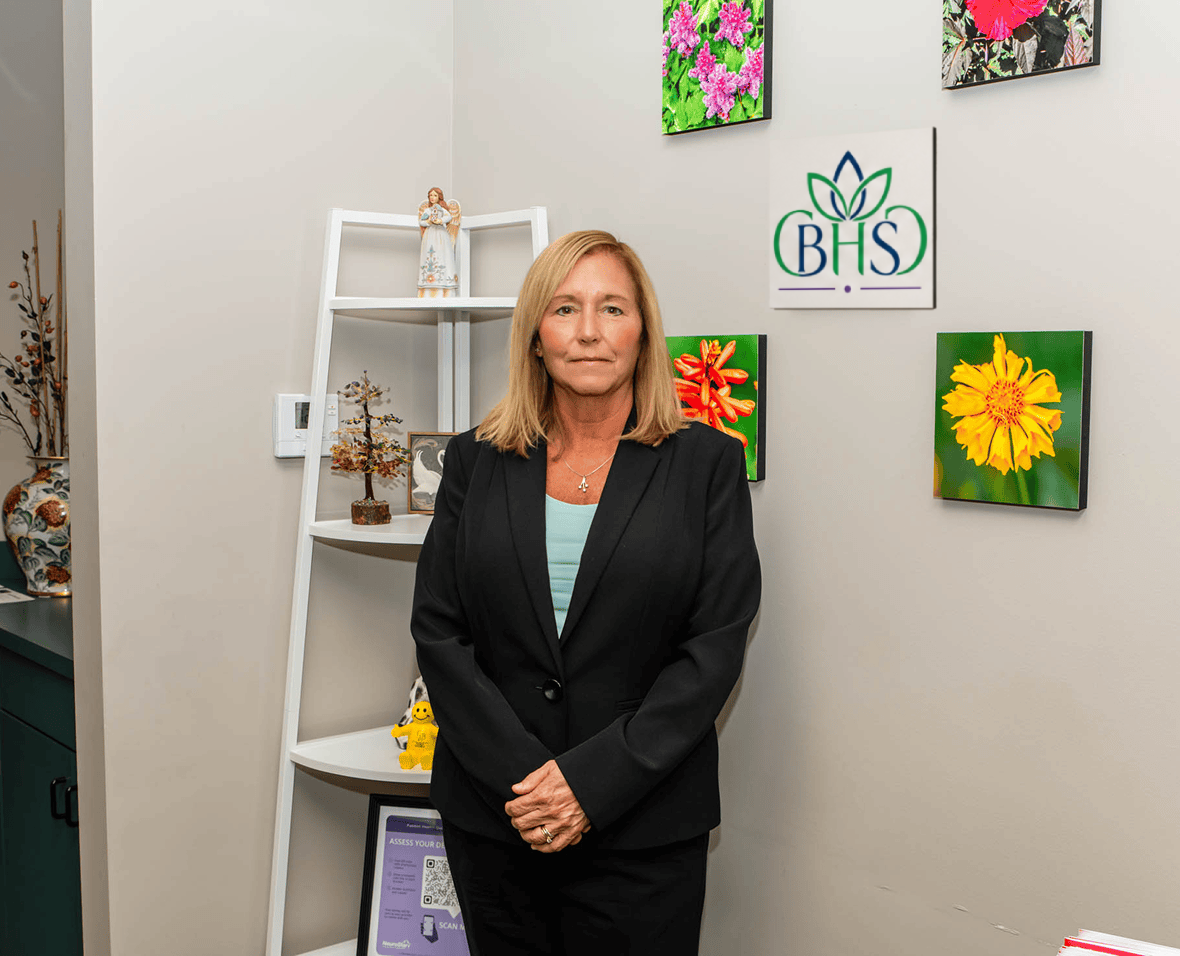
DeAnna Frye, PhD
DeAnna Frye, PhD, is a neuropsychologist who has been practicing in the northeast Ohio area since 1994. Neuropsychological assessment involves evaluation of an individual’s cognitive and emotional functioning including attention, memory, reasoning, expressive language and mood. Comprehensive assessment is offered for adults seeking evaluation for ADHD, traumatic brain injury, stroke, and neurodegenerative disorders (dementia). Dr. Frye also provides psychotherapy services to adults with known or suspected neurological disorders. She has a specialty interest in the treatment of individuals with a history of traumatic brain injury.